Transition Metal Chemistry
This guide is an early version — the text is complete, and a few figures are still being redrawn. Spotted something unclear? Let us know.
The question this page answers: How do transition metal-catalyzed reactions work?
Deeper reading: Chapter 40 Pages 1069-1088 — see our chapter-by-chapter practice map for Clayden.
Three categories of mechanistic steps
Metal-ligand, σ bond, π bond changes
Mechanistic steps in organometallic reactions fall into three categories:
- Metal-ligand changes
- σ bond changes
- π bond changes
In metal-ligand changes, ligands can associate or dissociate from a metal. Overall these processes can be combined to swap ligands on two different metals:

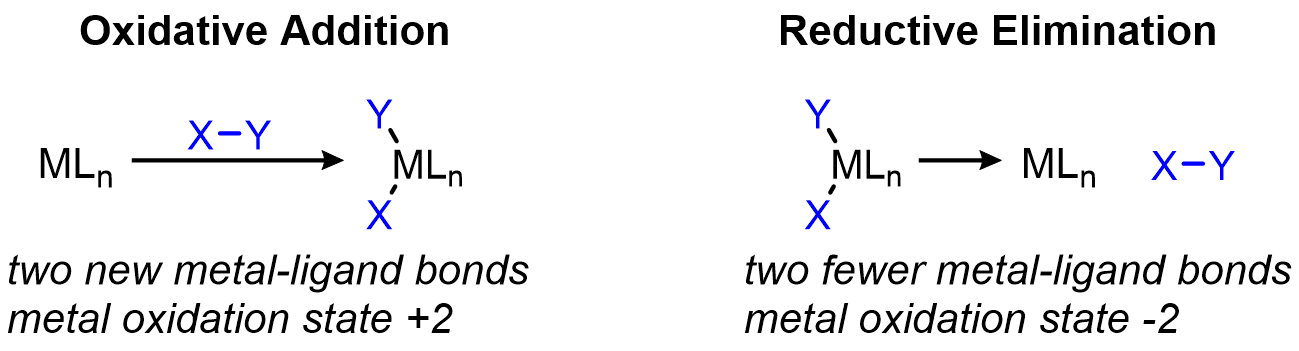
A metal ion can insert into (or be removed from) a σ bond between two atoms. These processes are oxidative addition and reductive elimination, respectively:
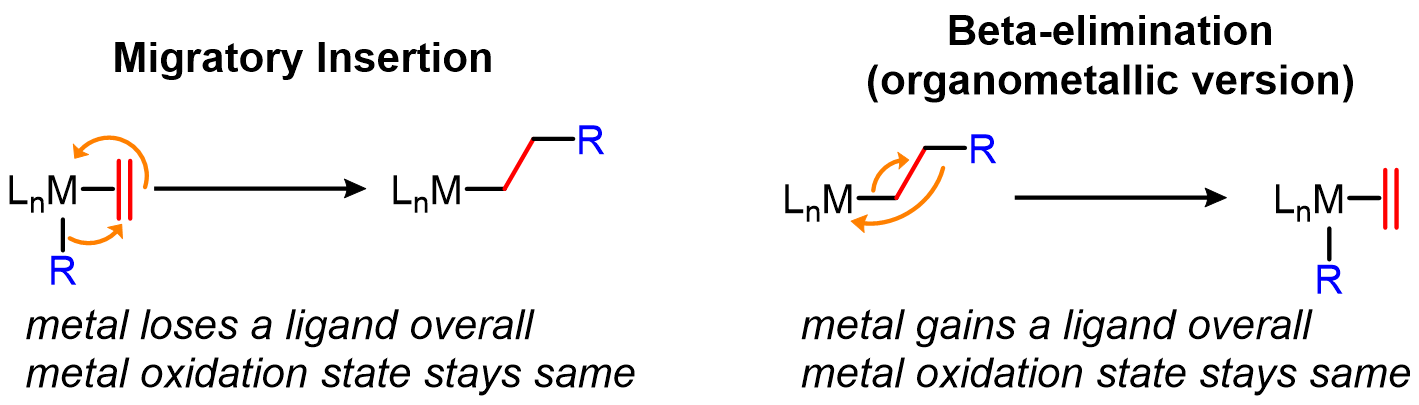
A ligand on a metal ion that is coordinated to a π bond can migrate onto the π bond, and vice versa. These processes are migratory insertion and β-elimination, respectively
Cross-coupling reactions
C–C bond formation with a metal catalyst
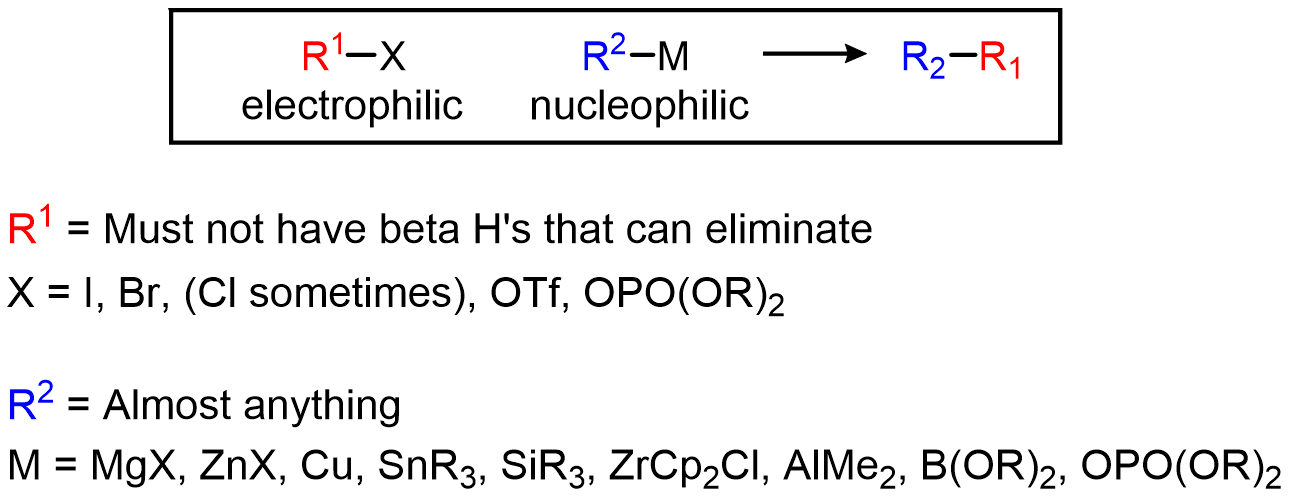
Transition metal complexes can be used as catalyst for a wide range of reactions. Of these, cross-coupling reactions are particularly useful.
A general scheme for a C–C bond forming reaction cross-coupling reaction is given here:
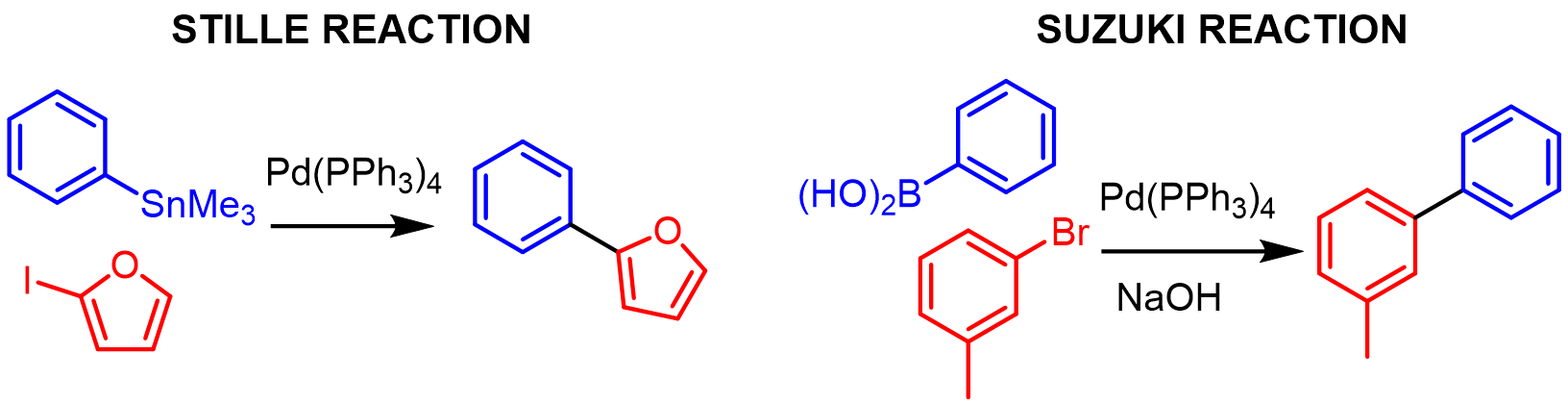
Many cross-coupling reactions are named and can be differentiated by the identity of the “M” group attached to R2. Here are two examples:
Catalytic cycles
Oxidative addition first, reductive elimination last
Mechanisms for cross-coupling reactions can be represented by catalytic cycles.
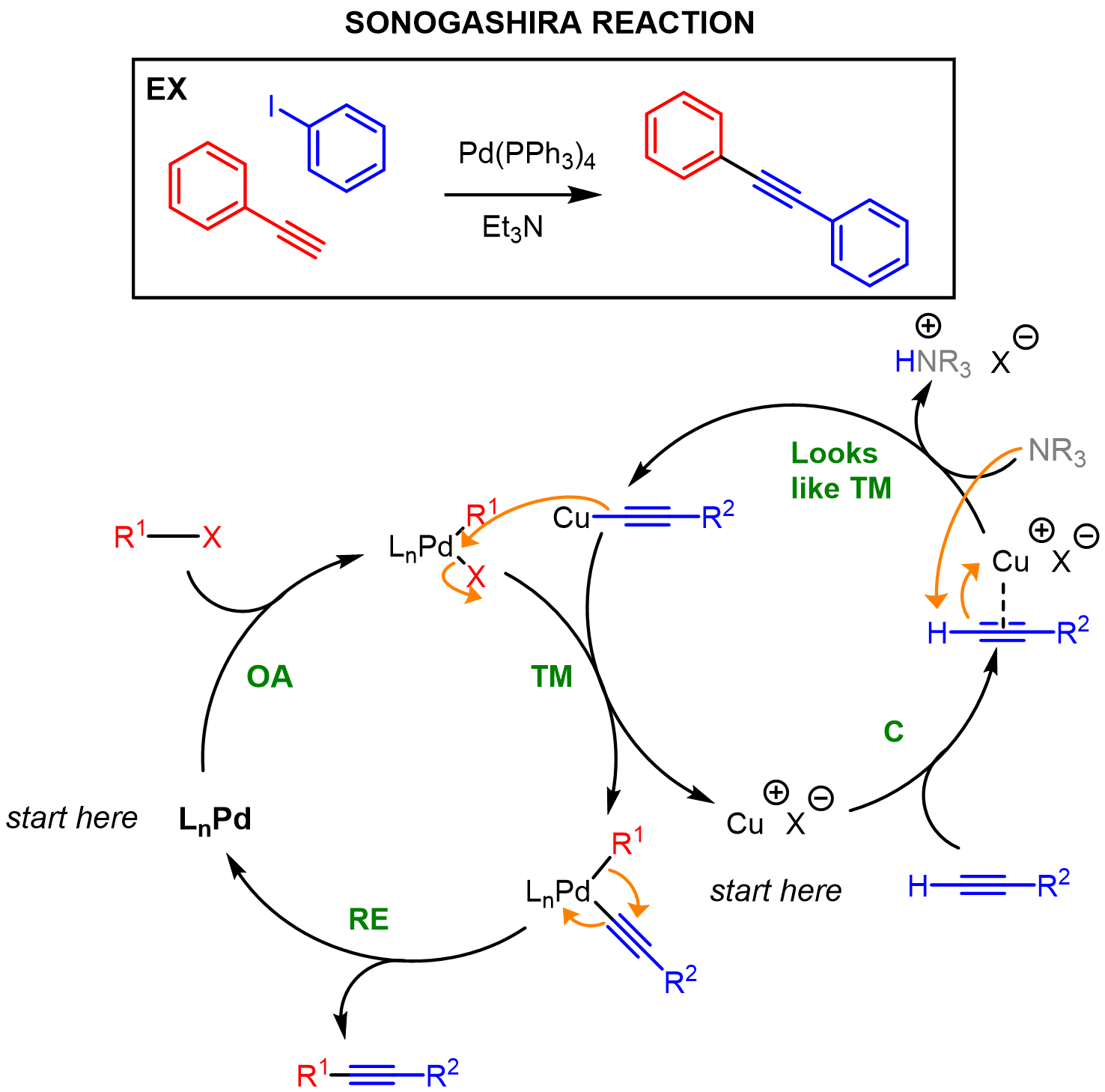
In these reactions, the metal will undergo oxidative addition at the beginning of the cycle and reductive elimination at the end. Between those two steps, other processes such as migratory insertion or transmetallation, etc, will take place. Here is an example for a Sonogashira Reaction:
Spotted an error, or want a topic covered next? Let us know.