Keto-Enol Tautomerization
This guide is an early version — the text is complete, and a few figures are still being redrawn. Spotted something unclear? Let us know.
The question this page answers: What is the deal with carbonyls and their enol forms?
Deeper reading: Clayden 2e: Chapter 20 Pages 449–460 — see our chapter-by-chapter practice map for Clayden.
Keto and enol forms
What is a tautomerization?
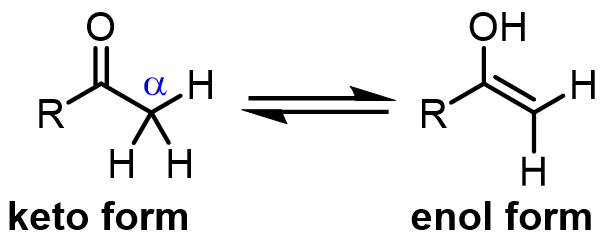
Carbonyl-containing compounds can equilibrate between electrophilic keto and nucleophilic enol forms, if there is an H α to the carbonyl.
The equilibrium between the keto and enol structural isomers is called a tautomerization:
Keto forms are typically more stable
Which tautomer dominates?
Although generally keto forms are typically more stable because the C=O π bond is more stable than the C=C one, there are a number of stable enols:

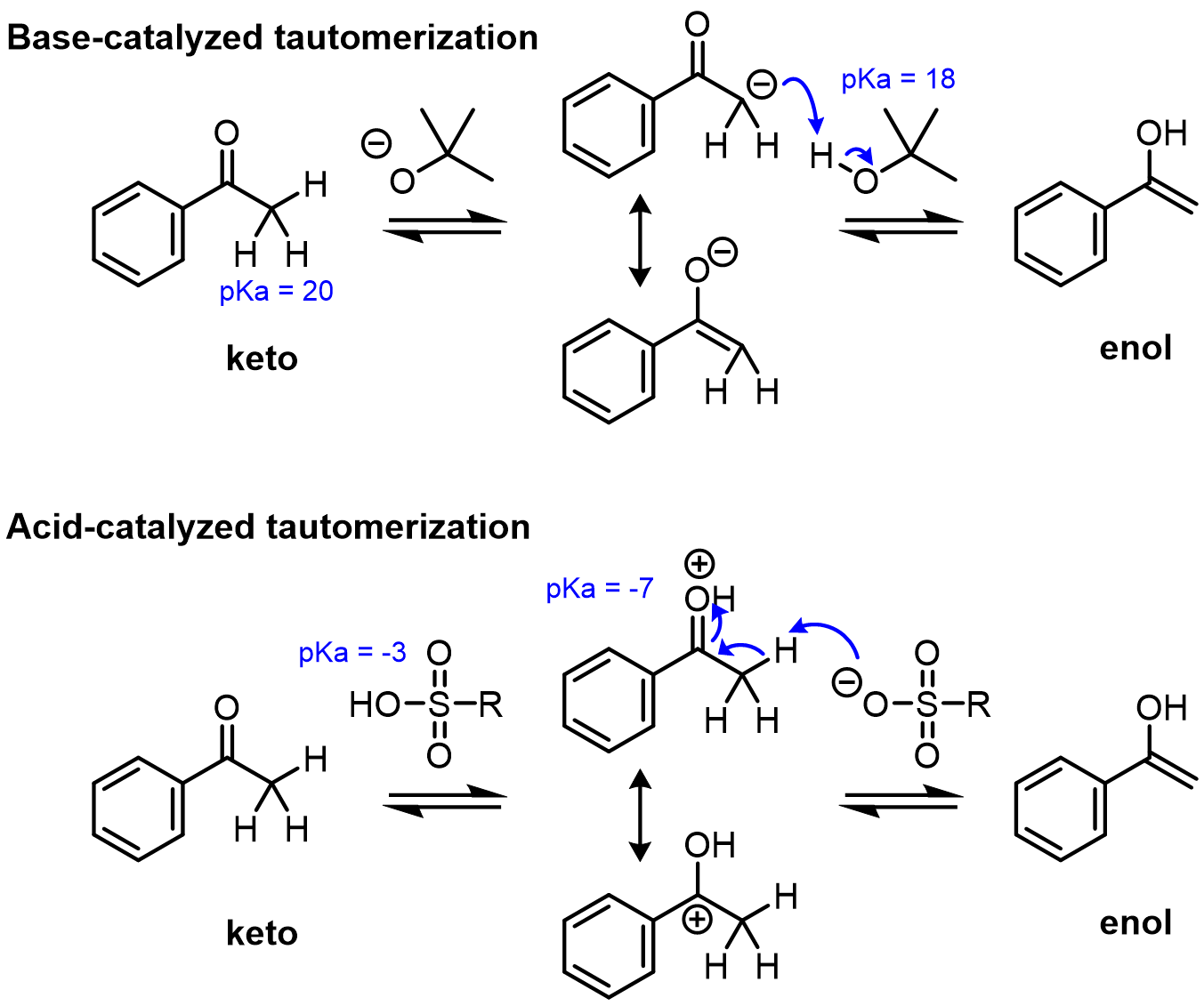
Catalyzed by either acid or base
Why is a catalyst needed?
This equilibrium between tautomers does not occur spontaneously, and must be catalyzed by either acid or base of appropriate pKa (for a reasonable equilibrium |ΔpKa| < 7):
Spotted an error, or want a topic covered next? Let us know.