Electrophilic Addition to Alkenes
This guide is an early version — the text is complete, and a few figures are still being redrawn. Spotted something unclear? Let us know.
The question this page answers: How do C=C bonds react?
Deeper reading: Clayden 2e: Chapter 19 Page 427–428 Chapter 23 Page 534–537 — see our chapter-by-chapter practice map for Clayden.
Alkene π bonds are nucleophilic
Why do alkenes react with electrophiles?
The C=C π bonds are nucleophilic in nature, and thus readily react with electrophiles in addition reactions.
Here is an example of an electrophilic addition to an alkene:

Categorizing by mechanistic intermediate
How are these reactions categorized?
Electrophilic additions to alkenes can be categorized by the type of mechanistic intermediates the reactions go through:
- Carbocation
- Radical
- 3-Membered Ring
- Cyclic / Concerted
Here is a summary of how reaction outcomes depend on the mechanistic intermediate:
Intermediate:
Carbocation
Radical
3-Membered Ring
Cyclic / Concerted
Regiochemistry:
Markovnikov*
Anti-Markovnikov*
Markovnikov-like
Not Applicable
Stereochemistry:
Syn + Anti
Syn + Anti
Anti
Syn
Rearrangements:
Yes
No
No
No
*The reaction goes through the pathway of the most stable intermediate; recall that more substituted carbocations are more stable.
Markovnikov regioselectivity
Which carbon gets the electrophile?
Markovnikov regioselectivity traditionally refers to the addition of H and X to an alkene such that the H adds to the less substituted carbon and X adds to the more substituted carbon.
Here is an example of the two possible regiochemistries of HBr adding to an alkene:
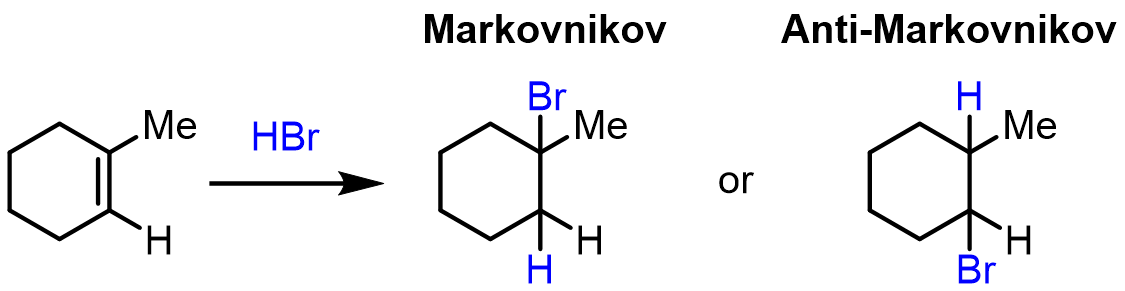
However, it is important to understand that even in reactions that appear to be anti-Markovnikov in regioselectivity, the mechanism always involves an electrophile being added to the less substituted carbon atom.
Stereoselectivity: syn vs. anti addition
Same face or opposite faces?
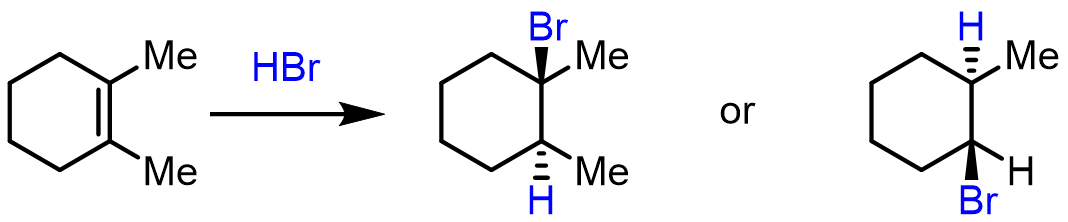
Stereoselectivity in electrophilic additions to alkenes is influenced by the mechanism of the reaction. When the two groups are added to an alkene bond, they can either add syn or anti with respect to each other.
In a syn addition, both new groups are added to the same face of the alkene:
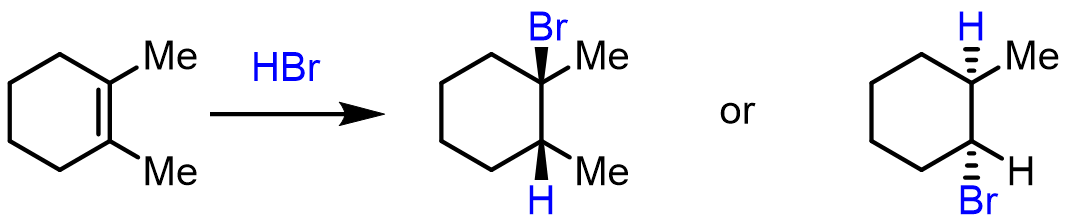
In an anti addition, the two new groups are added to opposite faces of the alkene:
Carbocation rearrangements
Why do carbocations rearrange?
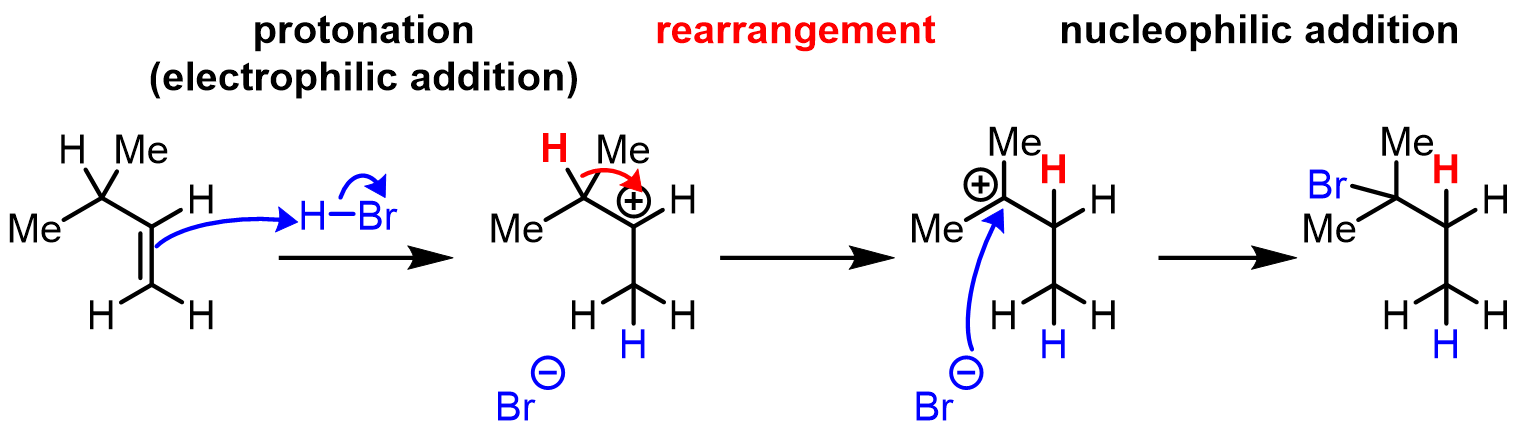
Carbocations can undergo rearrangement reactions to become a more stable carbocation.
Here is an example of such a rearrangement:
Spotted an error, or want a topic covered next? Let us know.