Aliphatic (sp3) Substitution Reactions
This guide is an early version — the text is complete, and a few figures are still being redrawn. Spotted something unclear? Let us know.
The question this page answers: How do substitution reactions take place at sp3 atoms?
Deeper reading: Clayden 2e: Chapter 15 Pages 328–359, Chapter 24 Pages 574–577 — see our chapter-by-chapter practice map for Clayden.
Two predominant mechanisms: SN1 and SN2
Unimolecular or bimolecular?
Substitution reactions can occur at sp3 hybridized atoms. These reactions will follow one of two predominant mechanisms, unimolecular SN1 or bimolecular SN2.
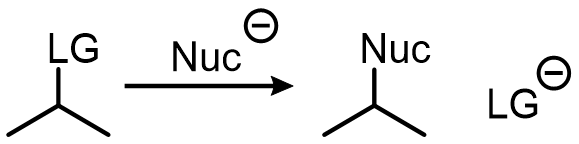
Overall, a substitution reaction consists of a nucleophile displacing a leaving group:
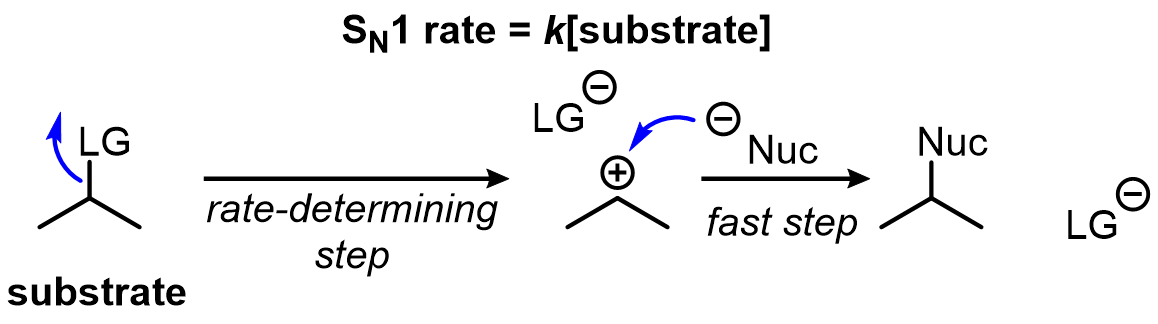
This can happen in two different ways. If the leaving group leaves first, it is an SN1 reaction because the rate-determining step is unimolecular:
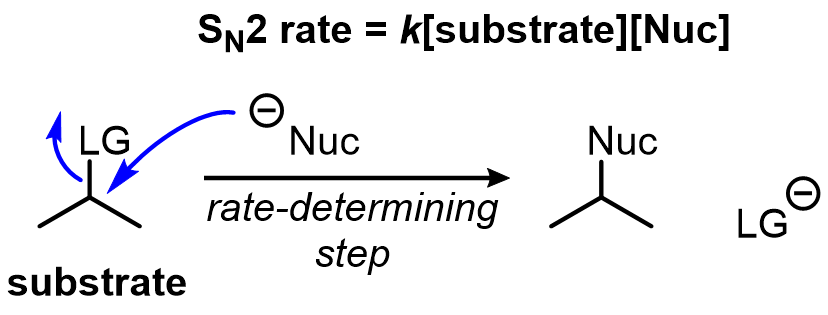
Alternatively, the nucleophilic attack and leaving group leaving can occur at the same time in an SN2 reaction, in which there is only one bimolecular step:
What controls the rate of an SN1 reaction
What makes an SN1 faster?
Important considerations for SN1 reactions are:
- Extent of carbocation stabilization in the intermediate
- Potential for carbocation rearrangements
Since carbocation formation is rate-determining, the more stabilized the carbocation intermediate is, the faster the SN1 reaction is. Stabilizing factors are 1) conjugation and 2) degree of substitution. Here are some relative rates for alkyl chloride reactions with EtOH:

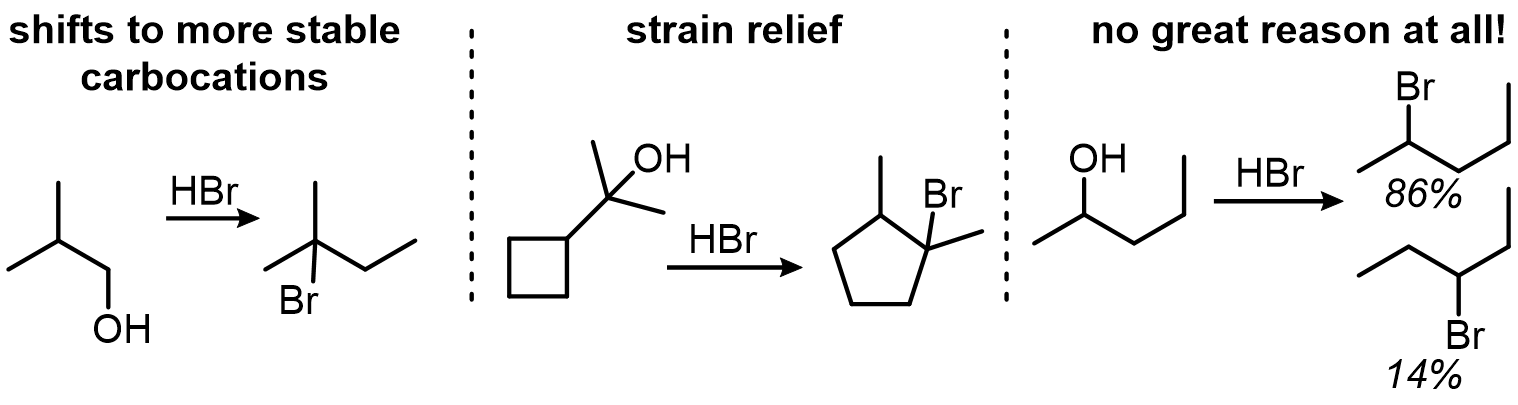
Because the SN1 intermediate is a carbocation, intermediates are a concern:
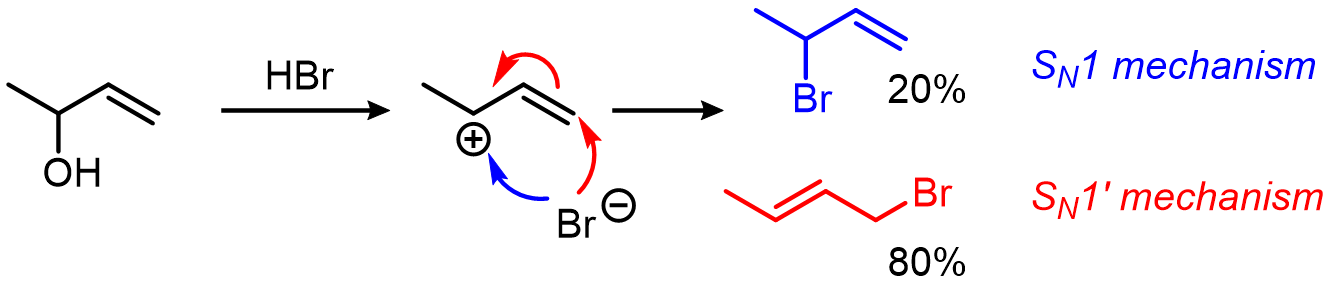
Allylic carbocations can undergo attack at different positions in what is called a SN1’ reaction:
What controls the rate of an SN2 reaction
What makes an SN2 faster?
Important considerations for SN2 reactions are:
- Transition state destabilization by sterics
- Transition state stabilization by conjugation
- Reactant destabilization by nearby electron withdrawing groups
- Strength of the nucleophile
Here are some relative rates for SN2 substitutions of alkyl chlorides by iodide:

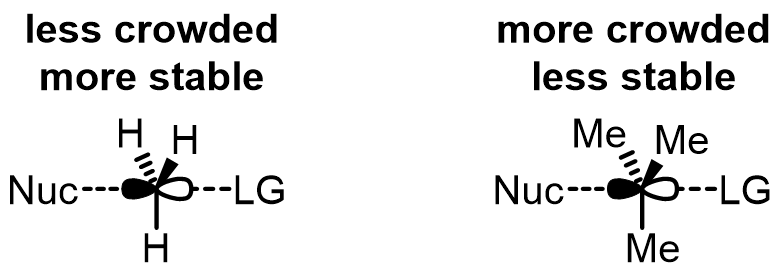
In all reactions, the difference between the energy of the reactants and the transition state controls the rate of the reaction. In SN2 reactions, transition states can be destabilized by sterics:
Transition states can be stabilized by conjugation:

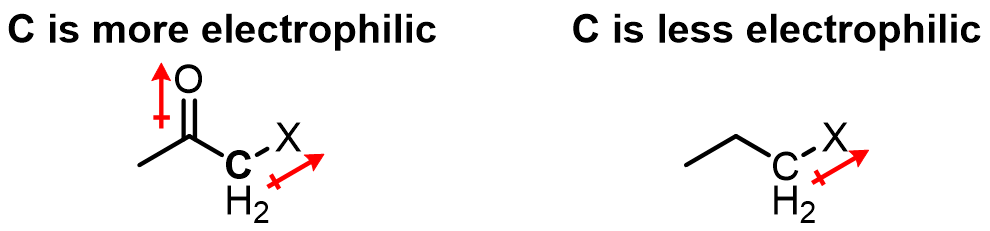
Reactants can be destabilized by increasing their electrophilicity with neighboring groups:
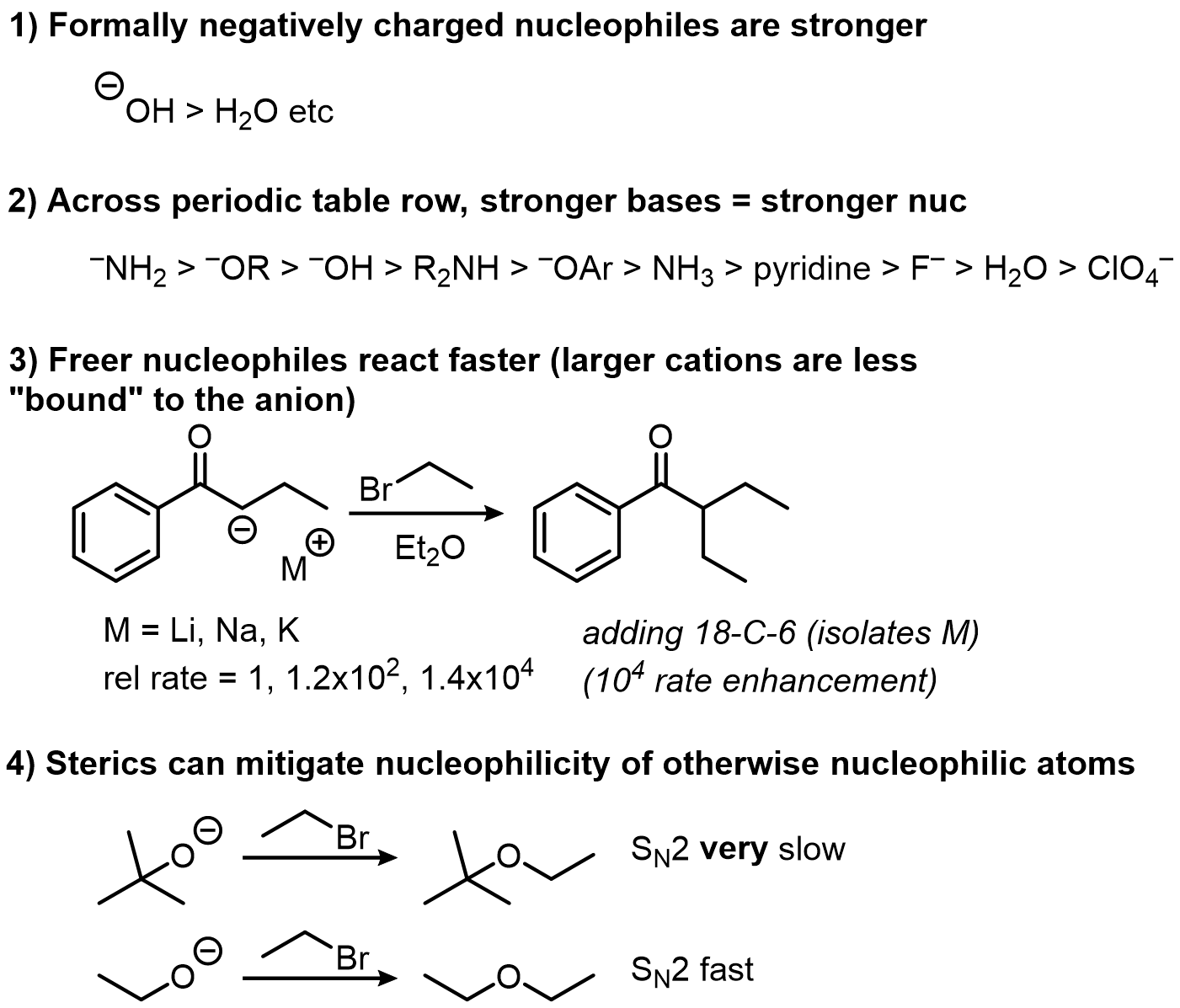
Stronger nucleophiles increase SN2 rates:
Stereochemistry: racemization vs. inversion
What happens at the stereocenter?
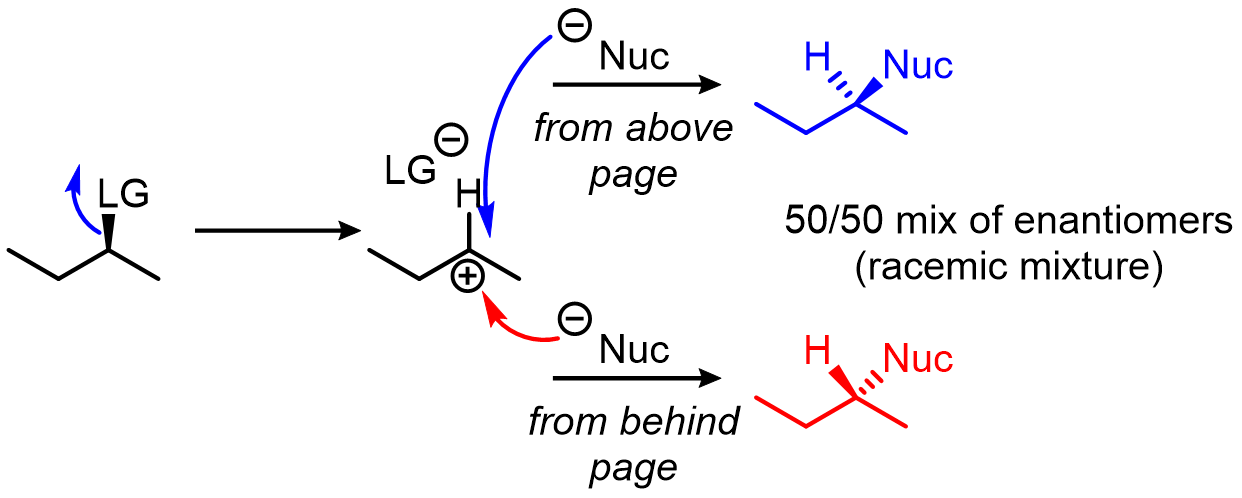
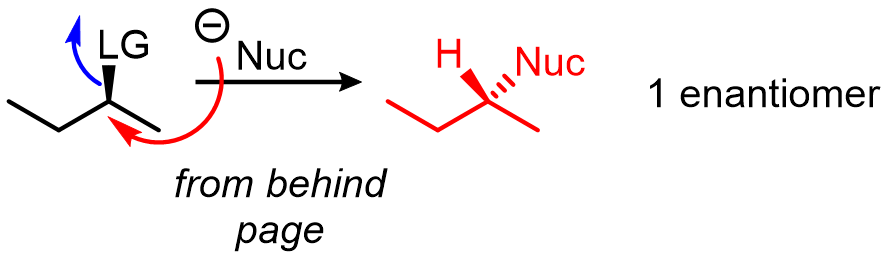
SN1 reactions generally produce racemic mixtures while SN2 reactions invert the stereochemistry at the reaction site.
Stereochemical information is usually lost in SN1 reactions because the nucleophile is being added to a planar carbocation:
Stereochemical information is inverted in SN2 reactions because the nucleophile must perform a backside attack:
Three classes of reaction solvents
How do solvents affect the reaction?
There are three classes of reaction solvents:
- Polar protic
- Polar aprotic
- Nonpolar
Solvents affect the stability of polar reactants, high energy transition states and/or intermediates in reactions through dipole interactions.
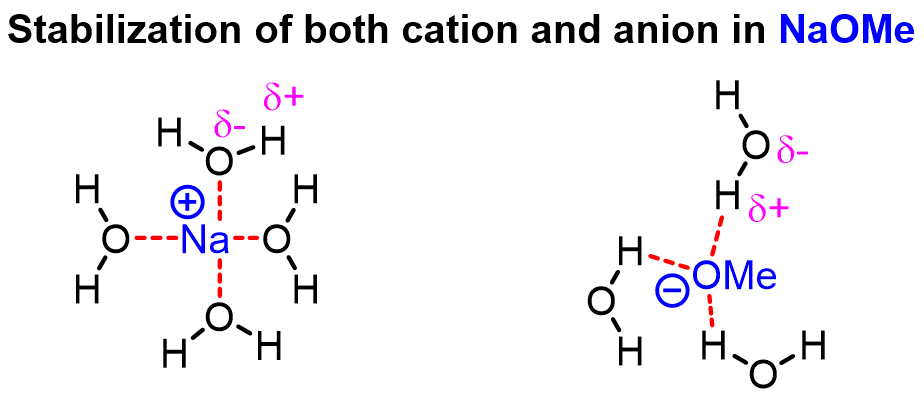
Polar protic solvents have OH and NH bonds, and are a good source of both δ+ and δ–:
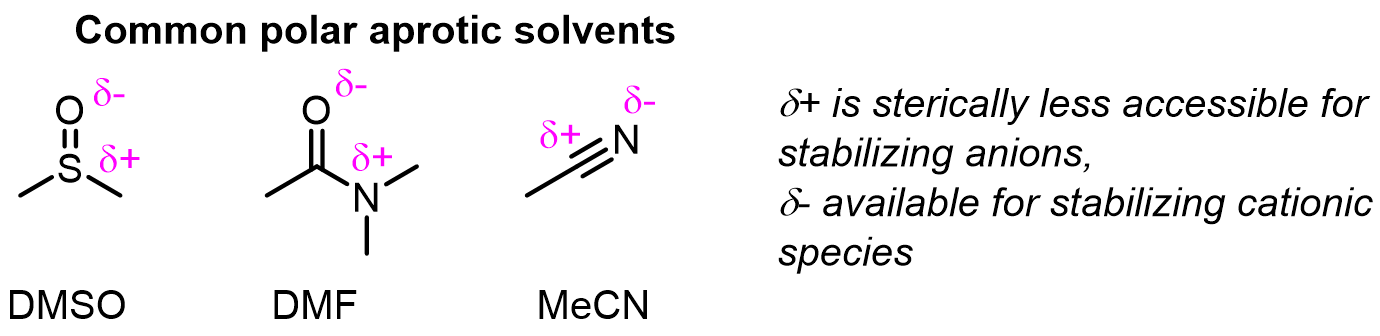
Polar aprotic solvents have a strong dipole but no H-bonding groups, and are typically better sources of δ– stabilization than δ+:
Nonpolar solvents don’t contribute significant dipolar stabilization, so they can still be effective for performing reactions because polar reactants are not stabilized, and thus remain reactive.
Leaving groups and reaction rate
What makes a good leaving group?
In both SN1 and SN2, better leaving groups lead to faster reaction rates.
A general correlation is that weak bases tend to be good leaving groups. Common SN2 leaving groups will have conjugate acid with a pKa < 2:

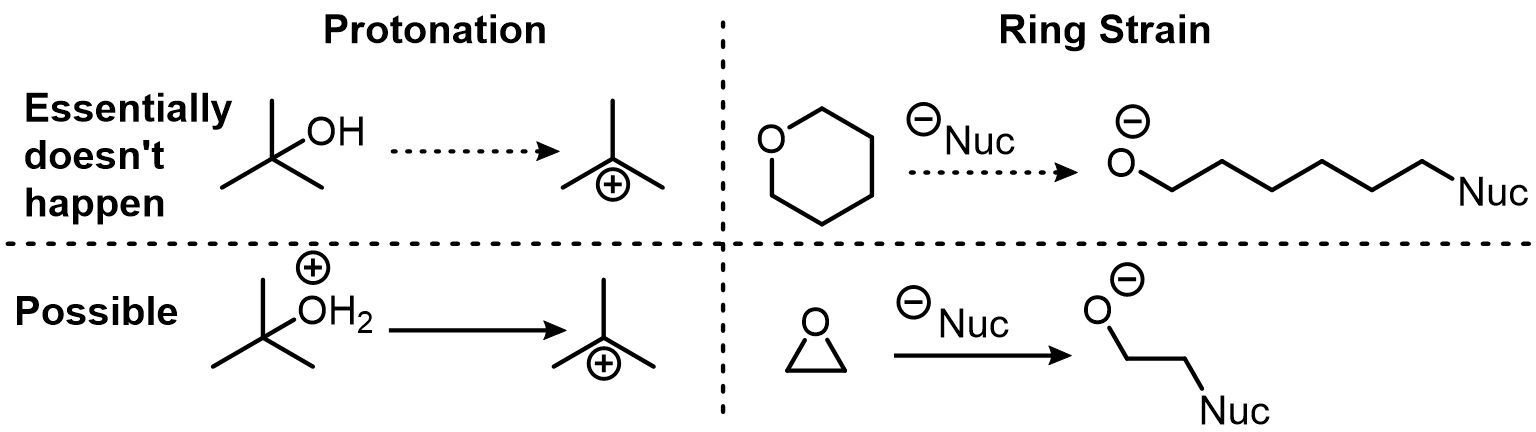
In certain circumstances the not so reasonable leaving groups can be made into reasonable leaving groups:
Spotted an error, or want a topic covered next? Let us know.